
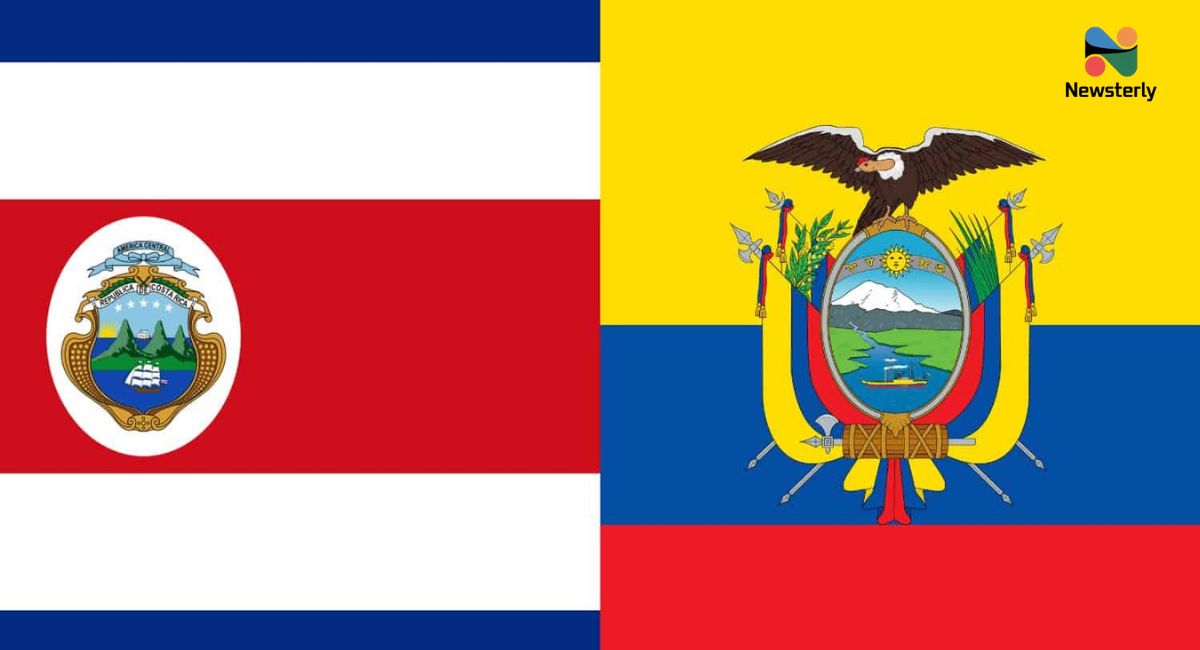

The Costa Rica – Flag is one of the strongest national symbols in Central America because it reflects independence, culture and identity. When people around the world see the Costa Rica – Flag, they instantly recognize its bold colors and powerful political history. The journey of the Costa Rica – Flag began with the early United Provinces of Central America flag, continued through independence, passed through multiple redesigns and finally became the national emblem that represents Costa Rica today. The evolution of the Costa Rica – Flag is a story of courage, pride and democratic ideals, shaped by leaders, artists and historical movements that influenced its modern appearance.
The Costa Rica – Flag today carries deep meaning for Costa Ricans and global visitors alike. Its design blends national symbolism, artistic influence and historic memory. The strong red stripe, the peaceful blue and the honest white tell the full story of the country’s values. When you explore the Costa Rica – Flag closely you see how the nation built its identity through independence, reform and cultural pride. This guide gives you a full, easy-to-understand look at the Costa Rica – Flag, from its birth in the 1800s to the symbol you see today across government buildings, schools and tourism campaigns.
República de Costa Rica – Overview
The history of the Costa Rica – Flag begins with the birth of the República de Costa Rica. After the region freed itself from Mexico in 1823, the early government needed symbols that expressed unity and vision. Costa Rica first used the federal flag of blue-white-blue stripes, which showed its connection to the larger Central American union. Over time Costa Rica built a separate identity, and that identity is now expressed boldly through the modern Costa Rica – Flag.
The República de Costa Rica grew into a peaceful, educated and democratic nation, and the Costa Rica – Flag became the visual expression of those values. Every transformation of the republic influenced the look and meaning of the national emblem. That’s why the Costa Rica – Flag is more than a design. It is the story of a nation.
The Flag of Costa Rica
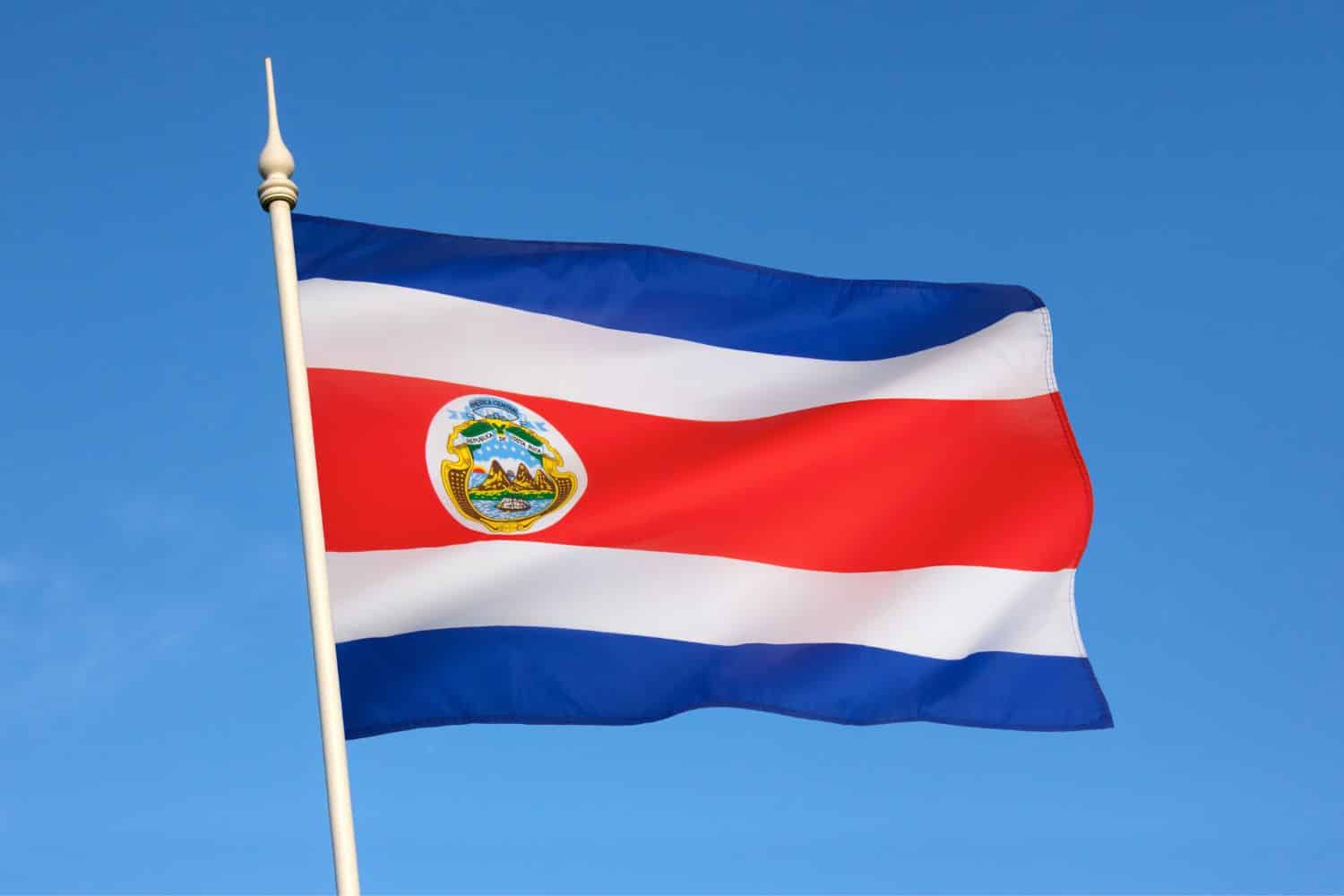
The Costa Rica – Flag as you see it today features blue, white and a wide red stripe. This design reflects courage, freedom, honesty and unity. The blue stands for the sky and opportunity, the white represents peace, and the red symbolizes warmth and bravery. These meanings come together to give the Costa Rica – Flag its emotional strength.
The government version of the Costa Rica – Flag includes the national coat of arms, which shows volcanoes, a ship sails on each sea, and seven stars representing the provinces. This design helps people easily identify the official Costa Rica – Flag when it appears on documents, embassies and national events.
Official Colour Specifications
The colors of the Costa Rica – Flag follow strict rules so the emblem always looks consistent. The blue must be deep and bright, the white must be pure and clear, and the red must be bold. These colors were influenced by the distinctive new design created in 1848, which reshaped the visual identity of the Costa Rica – Flag forever.
Every detail of the color system strengthens the meaning of the Costa Rica – Flag. The red stripe was described as the “civilization of the century”, while the blue and white express clarity and peace. When all these colors combine they form a symbol recognized worldwide as the Costa Rica – Flag.
Symbolism of the National Flag
The symbolism of the Costa Rica – Flag helps people understand the spirit of the nation. Blue symbolizes the sky, opportunity and spiritual ideals. White stands for honesty and tranquility. The red stripe represents strength, love and courage. The meaning of the Costa Rica – Flag deepened after the famous addition of a red stripe, inspired by French democratic ideals.
Costa Ricans often say the red stripe reflects the “first rays of its true independence”, a phrase that still captures the emotion behind the Costa Rica – Flag. This symbolism makes the national emblem one of the most meaningful flags in Central America.
Historical Evolution of the Costa Rican Flag
The evolution of the Costa Rica – Flag began with the United Provinces of Central America flag, a design that used blue and white stripes to show unity. Costa Rica later experimented with its own versions, including the 1840–42 flag, which reversed the stripes to white-blue-white. These early flags show how the modern Costa Rica – Flag slowly developed from regional symbolism into national identity.
The real turning point came with the 1848 Costa Rica flag redesign, led by Pacífica Fernández Oreamuno, who admired French ideals. Her redesign created the foundation of the Costa Rica – Flag that exists today.
Costa Rican Independence and Early Symbols
Independence shaped the Costa Rica – Flag in powerful ways. Once the country separated from Mexico and strengthened its position inside the Central American federation, it began forming its own national symbols. The early coat of arms, stripe patterns and emblems reflected Costa Rica’s growing confidence.
The early era formed the roots of national symbolism in Costa Rica, and every change in those years helped shape the Costa Rica – Flag into a symbol of peace, education and progress.
Costa Rica in the 20th Century
The twentieth century brought major updates to the Costa Rica – Flag. The coat of arms was altered slightly in 1906 and 1934, and then the October 21, 1964 coat of arms update created the version used today. These updates added detail and clarity to the emblem.
These changes helped the Costa Rica – Flag stay modern as the nation grew more stable and democratic. Each update strengthened the flag’s meaning and made it easier for the world to recognize.
Transition to Democracy
The transition to democracy transformed the meaning of the Costa Rica – Flag. When Costa Rica abolished its army, the flag became the strongest visual symbol of peace and unity. This moment changed how citizens viewed the Costa Rica – Flag because it represented hope instead of conflict.
Democracy made the flag more meaningful because it expressed the nation’s commitment to fairness, equality and civil rights. Today people look at the Costa Rica – Flag as a symbol of national pride and peaceful identity.
Costa Rica from 1974 to 2000
Between 1974 and 2000 Costa Rica expanded its tourism, strengthened democratic institutions and invested in education. Through all these changes the Costa Rica – Flag represented progress and stability. Many foreign visitors saw the Costa Rica – Flag during these years and associated it with peace and natural beauty.
The national emblem stayed consistent and strong. This helped the Costa Rica – Flag gain worldwide recognition and become one of the most admired symbols in the region.
Costa Rica in the 21st Century
In the 21st century the Costa Rica – Flag became closely tied to eco-tourism and global respect. Costa Rica promotes itself as a green, peaceful and democratic nation, and the Costa Rica – Flag appears everywhere from airports to environmental campaigns.
The modern identity of the country blends tradition with innovation. No matter how the world changes, the Costa Rica – Flag remains the core symbol of unity and pride.
Special Use Flags: Storm Warning Signals
Costa Rica uses storm warning signals along its coastlines, but these are separate from the Costa Rica – Flag. They still connect to national safety efforts and represent responsibility and protection.
Although these are not national flags, they show how the idea of symbolism extends beyond the Costa Rica Flag into daily life and public safety.
Mourning Flag of Costa Rica
Costa Rica uses a mourning version of the Costa Rica Flag during national tragedies. This version symbolizes unity and remembrance. When the mourning flag appears on official buildings, it reminds citizens of shared history and loss.
The mourning design helps people honor those who contributed to the nation. It keeps the emotional meaning of the Costa Rica Flag alive during solemn moments.
Simplified Costa Rican Flags in Pop Culture
The Costa Rica Flag also appears in pop culture, often in simplified styles. Animated shows like South Park use design reductions to make the symbol easier to display. Even in simplified form the Costa Rica Flag remains recognizable.
Pop culture versions show how iconic the design truly is. Even when simplified, the Costa Rica Flag keeps its meaning and identity.
Historical State Flags
Costa Rica used several historical state flags before adopting the modern Costa Rica Flag. These earlier designs resembled the banners of El Salvador, Guatemala, Honduras and Nicaragua because the countries shared a federation. When comparing the historical flags of Central America, it becomes clear how each nation developed separate identities.
These comparisons help explain how the Costa Rica Flag transformed from a regional symbol into a uniquely Costa Rican emblem.
See Also and Further References
People who study the Costa Rica Flag often explore neighboring designs. The flag histories of El Salvador, Guatemala, Honduras and Nicaragua provide helpful context for understanding shared symbolism.
These regional connections make the modern Costa Rica Flag even more meaningful because they show how Costa Rica created its own identity out of common heritage.
Conclusion
The Costa Rica Flag is a powerful symbol of independence, democracy and national pride. Its journey from the United Provinces of Central America flag to the modern design reflects bold decisions and cultural evolution. Every color, stripe and emblem tells a piece of Costa Rica’s story.
Today the Costa Rica Flag stands as a proud reminder of the country’s values, history and commitment to peace. It remains the heart of Costa Rica’s national identity.
FAQs
Why are there two flags for Costa Rica?
Costa Rica uses two versions of its national flag: the civil flag without the coat of arms and the government flag that includes the coat of arms for official use.
What flag is 🇨🇷?
🇨🇷 is the national flag of Costa Rica, featuring blue, white and a wide red stripe inspired by the 1848 redesign.
Which country does Costa Rica belong to?
Costa Rica is an independent nation in Central America; it does not belong to any other country.
What is Costa Rica best known for?
Costa Rica is known for its biodiversity, peaceful democracy, stunning beaches and eco-tourism.
Do I need a visa to visit Costa Rica?
Many nationalities, including U.S. citizens, can enter Costa Rica visa-free for short stays, but requirements depend on your passport.
You May Also Read
How To Watch Monday Night Football Tonight

